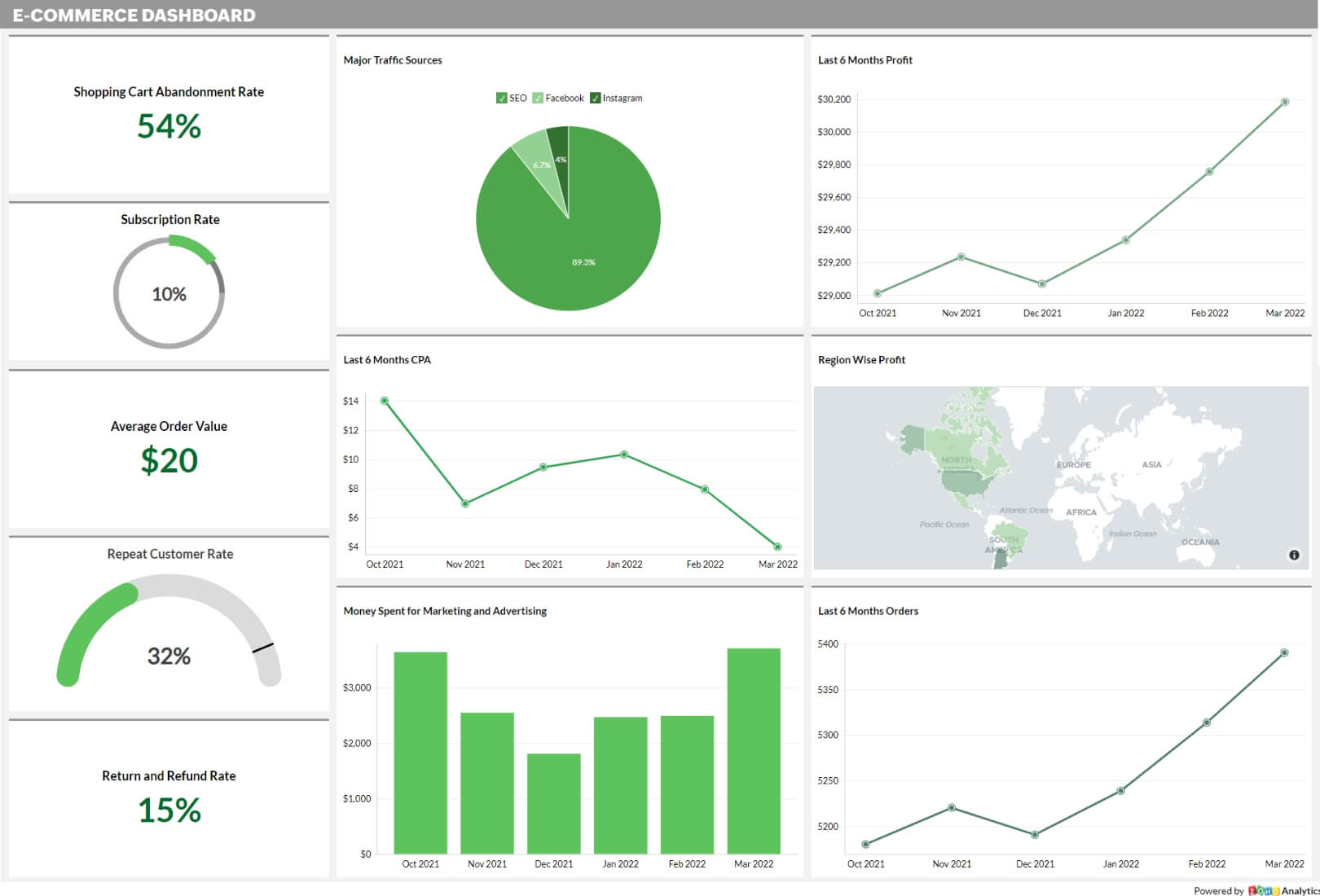
Selecting an analytics tool is one of the most critical decisions for e-commerce success. The right platform provides actionable insights that drive conversions, optimize marketing spend, and improve customer retention, while a poor choice can waste resources and leave you with incomplete data. This guide walks you through the essential criteria to evaluate and the leading tools available in 2025.
Understanding Your Business Stage and Goals
Before evaluating specific tools, clarify what you want to achieve. Your business maturity determines the best starting point. Early-stage stores launching their first analytics should begin with Google Analytics 4 and Hotjar for visual insights, as both offer free plans covering most fundamental needs. As your business scales, you may add tools like Mixpanel to track specific user behaviors and build retention strategies. At enterprise level, consider Matomo for data ownership or Triple Whale for comprehensive direct-to-consumer (DTC) analytics.
Your analytics goals should inform everything else: Are you focused on inventory control, increasing sales, or improving customer retention? Different tools excel at different objectives, so clarity here prevents costly misalignment.
Key Selection Criteria
When evaluating e-commerce analytics tools, assess these core dimensions:
Integration Capabilities
Native integrations with your existing technology stack are essential. Your analytics platform must connect seamlessly with your e-commerce platform (Shopify, WooCommerce, Magento, BigCommerce), CRM, marketing tools, and ERP systems. Poor integration forces manual data compilation, creating inefficiencies and incomplete analyses. For Shopify stores specifically, native integrations ensure automatic reporting, real-time analysis, and access to all sales channels’ data. For WooCommerce stores, WooCommerce Analytics is the built-in solution most new store owners should prioritize.
Real-Time Reporting and Data Accuracy
Fast-moving retail operations require real-time insights into sales, orders, and product performance. Beyond speed, ensure the tool provides unsampled data. Matomo delivers 100% unsampled data, while Google Analytics 4 can apply data sampling or privacy thresholds that hide critical information, especially for larger stores. For Shopify merchants, some tools like Piwik PRO offer Shopify-optimized integration with reliable session and event tracking, whereas GA4 sometimes fails to track all Shopify interactions reliably without custom setup.
Data Ownership and Privacy
Your data governance preferences significantly impact tool selection. Matomo provides full data control with options for on-premise hosting, giving you complete ownership—your data is never sold or reused. Google Analytics is cloud-based, with data controlled by Google. Piwik PRO offers full control with data stored in the EU or your chosen region, never shared or sold. This distinction matters for GDPR compliance and businesses prioritizing data privacy.
Customization and Visualization
Look for tools offering customizable dashboards, drag-and-drop report building, and the ability to focus on business-critical metrics. Matomo supports custom goals and events (form submissions, downloads, purchases) easily. Shopify Analytics provides custom reports with specific filters and columns, plus access to a vast ecosystem of apps for advanced segmentation. GA4 offers powerful funnel exploration and cross-platform tracking but has a steeper learning curve.
Ease of Use and Training Requirements
A user-friendly platform maximizes ROI by ensuring your team can extract meaningful insights confidently. Some tools like Google Analytics have a confusing, non-intuitive interface requiring significant training. Matomo is more familiar to users from Universal Analytics and offers streamlined installation. OnePageGA is specifically designed for beginners wanting simple e-commerce insights.
Essential E-Commerce Metrics to Track
Before committing to any tool, ensure it tracks metrics aligned with your business priorities. Critical daily metrics include conversion rate, site uptime, and ad spend pacing. Weekly tracking should cover traffic sources, sales by referrer, and return-on-ad-spend (ROAS). Monthly and quarterly reviews focus on customer lifetime value (CLTV), retention rates, repeat customer rate, and net promoter score (NPS).
Additional important e-commerce metrics include average order value (AOV), cart abandonment rate, customer acquisition cost (CAC), items added to cart versus items purchased, and gross/net revenue per product. SKU-level ad spend helps you identify whether you’re spending $100 to sell a $40 product.
Comparison of Leading Platforms
Google Analytics 4
Best for teams needing free, AI-powered insights across web and app. GA4 excels at showing customer engagement and website traffic metrics with clear dashboards. It integrates seamlessly with Google Ads, making attribution optimization straightforward. However, it requires significant setup for Shopify-specific tracking, uses data sampling for large stores, and has a complex interface.
Pricing: Free with Google Analytics 360 available for enterprise
Matomo
Best for teams needing GDPR-friendly analytics, full data ownership, or deep customization. Matomo’s ecommerce solution goes beyond simple tracking with heatmaps and session recordings to understand shopper behavior. Features include 100% unsampled data, built-in tag manager, multi-channel attribution, and support for WordPress and WooCommerce. The interface is more familiar than GA4, and custom goals are easier to set up. Self-hosting provides maximum privacy and control.
Pricing: Self-hosted free version; cloud plans from €19/month
Adobe Analytics
Best for teams valuing predictive analytics and customization. This enterprise-level platform combines web, product, and predictive analytics for real-time insights. It delivers advanced customer segmentation and seamless integration with the Adobe Experience Cloud ecosystem.
Pricing: Enterprise custom pricing (typically $5,000+/month)
Shopify Analytics
Built into every Shopify store, providing detailed sales reports, customer behavior analysis, product performance insights, and financial metrics like gross and net profit. It tracks cart abandonment rates and enables customer segmentation. However, it offers limited data visualization, limited access to raw data, and limited customizability of default reports. Consider it a foundation and complement with third-party tools for advanced analysis.
Pricing: Free (included with Shopify)
Hotjar
Best for understanding customer experience through heatmaps, session recordings, and user feedback tools. It provides detailed analysis of user sessions and is ideal for UX improvements. Works well paired with GA4 for early-stage stores.
Pricing: Free plan available with limited features; paid plans from ~$99/month
Mixpanel
Focused on user behavior tracking and retention strategies. It provides cohort analysis, behavioral tracking, and revenue attribution.
Pricing: From $39/month
Woopra
Excels at customer journey analytics with detailed insights into every lifecycle stage. Features include real-time analytics, customer profiles, journey tracking, and automation triggers. Plans start at $349/month, making it best for businesses prioritizing deep customer journey understanding.
Kissmetrics
Provides advanced analytics tailored for e-commerce with focus on individual customer behavior. Features include behavioral tracking, cohort analysis, revenue attribution, and A/B testing.
Piwik PRO
Shopify-optimized alternative offering reliable tracking without GA4’s limitations. Features include built-in CDP, full data activation across ad platforms, 100% unsampled data, and native Shopify compatibility.
Pricing: Custom pricing (typically starting at ~$99/month based on features)
ROI-Focused Selection Framework
Calculating analytics ROI requires tracking all costs (software licenses, infrastructure, personnel, training, maintenance) against measurable benefits (revenue increase, cost savings) and indirect gains (improved customer satisfaction, better decision-making).
The formula is:

To maximize ROI, start with clear goals, focus on quick wins with high impact potential, use industry benchmarks to validate targets, and monitor performance regularly. A tool offering better insights that drives even a 5% improvement in conversion rate or reduces customer acquisition costs often pays for itself within months.
Pricing Considerations
Analytics tool budgets vary by business size. Small businesses (under $2M annual revenue) should budget $49-99/month for basic repricing with 1-2 marketplace integrations. Growing brands ($2M-$10M revenue) typically need $200-500/month for cross-channel support and analytics. Enterprise solutions ($10M+ revenue) range from $1,000-$5,000+ monthly for AI-driven analytics and custom setups.
Implementation Best Practices
Begin with a clear definition of success metrics before implementation. Ensure your chosen platform integrates seamlessly with your tech stack to avoid manual data work. Prioritize customizable dashboards that display metrics relevant to your specific goals. Set up automated reporting and alerts to monitor critical KPIs without manual intervention. Always verify data accuracy and security compliance with relevant regulations. Select scalable, easy-to-use software that your team can adopt quickly.
Making Your Final Decision
The ideal choice balances functionality, cost, ease of use, and strategic alignment. For most e-commerce businesses starting out, Google Analytics 4 paired with Hotjar provides excellent coverage at low cost. As you scale, evaluate specialized tools based on specific gaps—whether that’s data privacy (Matomo), customer journey focus (Woopra), or complete DTC visibility (Triple Whale).
Run both your current tool and a prospective replacement in parallel for 30 days if possible, comparing data accuracy and insights quality. This validation period often reveals hidden limitations that only become apparent with real use. Given the business impact of accurate analytics, investing time in the right selection now prevents costly mistakes and missed growth opportunities later.